Magnus Lab RNA Design & Therapeutics Join us
University of Warsaw · CeNT

Understand RNA shapes to design RNA therapeutics.

RNA does its work in three dimensions, so we start from the shape. The Laboratory of RNA Design and Therapeutics combines deep learning and experimental methods to predict those shapes and to design aptamers, therapeutic mRNA and chemically modified RNA.

2026Lab founded
SONATA BIS 15NCN funding · 2026–2031
Research areas

From sequence to structure to therapy

RNA does its work in three dimensions. We predict that geometry with machine learning, then use it to design molecules that bind, fold and function the way we intend.

Deep learning

RNA 3D structure prediction

End-to-end models that go straight from sequence and alignment to atomic coordinates, built on the OpenFold architecture and trained on curated structural data.

  • OpenRNAFold — end-to-end RNA folding
  • Covariation and alignment signal as model input
  • Benchmarking against RNA-Puzzles and CASP targets
Ligands & aptamers

RNA–small molecule interactions

Which pockets does a folded RNA actually present, and what binds them? We combine structure prediction with selection experiments to make binding predictable.

  • SELEX library design and diversity metrics
  • SmartLib — structure-aware library generation
  • Aptamer-based electrochemical biosensors
Therapeutics

Modified RNA & mRNA design

Chemical modification changes both folding and function. We model pseudouridine (Ψ) thermodynamics and apply it to translation control elements.

  • Nearest-neighbour parameters for Ψ
  • SHAPE-MaP validation of predicted structures
  • IRES design with Ψ substitution (EMCV, CVB3)
Data

Datasets and benchmarks

Models are only as good as the data behind them. We curate structural RNA data and keep train/test splits honest, family by family.

  • RNA3DB — non-redundant structural splits
  • Manual QC of Rfam family ↔ PDB mappings
  • Open pipelines, reproducible releases
How we work

Predictions are not results until the bench says so

Computation and experiment are one cycle here, not two groups. A model proposes a structure or a binder, the lab measures whether it behaves as predicted, and the measurement goes back into the training data.

Step 1 · predict

The model proposes

Structure prediction and ligand-conditioned generation produce candidate folds, aptamer sequences and modified constructs, ranked by the model's own confidence.

Step 2 · test

The bench decides

Candidates go into SELEX, binding assays and SHAPE-MaP probing. Predicted structure and predicted affinity are compared against what the molecule actually does.

Step 3 · feed back

The data returns to the model

Hits and failures alike become training and benchmark data, so the next round of predictions is wrong in fewer places than the last.

predict → test → feed back → predict · every dataset we generate is released with the model that learned from it

Software

Tools we build and maintain

Everything the lab produces is released openly, with permissive licensing, so results can be reproduced and reused.

OpenRNAFold

End-to-end deep learning approach for RNA 3D structure prediction, built on OpenFold. Apache-2.0.

Active
RNAhub

Automated web pipeline that searches for RNA homologs, aligns them and assesses the secondary structure of the resulting alignment. Published in Nucleic Acids Research (2025).

Web server
RNA3DB

Structurally non-redundant dataset of RNA structures with sequence-identity-aware splits for training and evaluation.

Active
rna-tools

Toolbox for handling RNA 3D structures: format conversion, renumbering, cleaning, batch analysis.

Maintained
Latest updates

News from the lab

New results, people joining, talks and preprints.

Training

SELEX training at the Center of Aptamer Research and Development, Bonn

Hands-on SELEX training at CARD, hosted in Günter Mayer’s group at the LIMES Institute, University of Bonn. CARD runs an automated platform for generating customized aptamers and makes it available to academic and industrial researchers as a non-profit service, together with Marcus Menger’s Functional Nucleic Acid – Aptamer laboratory at the Fraunhofer Institute for Cell Therapy and Immunology in Potsdam. The visit brings the experimental side of aptamer selection into the lab, next to the models we build for it.

“Usually once you become a PI, you stop pipetting. I’m doing the reverse PI-ing!” — Magnus, at the bench in Bonn.

Talk

Invited lecture in Bonn — “The AlphaFold for RNA”

Hybrid invited lecture at the Institute of Structural Biology, University Hospital Bonn, on 18 September 2026. Hosted by Radosław Nowak.

Team

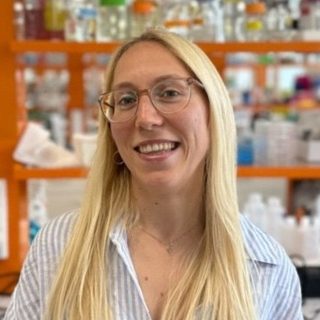
Jadwiga Meissner joins the lab as experimental postdoc

Jadwiga starts this month, taking on in vitro selection of RNA aptamers and testing computationally designed binders at the bench — the step that closes the loop between predicted structures and measured affinity. Funded by the NCN SONATA BIS-15 grant. Welcome!

Outreach

Guests at the Collegium Invisibile Summer School in Ciążeń

Together with Juliusz and Grzegorz Łach we spent a day with the seventeen participants of the Collegium Invisibile Summer School, run with Fundusz Zdolni (formerly the Polish Children's Fund) at the rectors' palace in Ciążeń. The students are sixteen to eighteen years old and heading in every direction — medicine, engineering, linguistics — so we talked about what computational RNA biology actually looks like from the inside.

Talk

OpenRNAFold presented at BIT26 in Toruń

“OpenRNAFold: an end-to-end approach for RNA 3D structure prediction” — talk given at the BIT26 conference, 18–20 June 2026.

Talk

OpenRNAFold at the BOB seminar, University of Warsaw

Marcin gave the last Computational Biology and Bioinformatics seminar before the summer break, on 10 June in room 3250 at Banacha 2 — an end-to-end, AlphaFold-style approach to RNA 3D structure prediction, built on carefully curated training data (RNA3DB) and high-quality alignments (RNAhub) to avoid the inflated accuracy that comes from overlap between training and test sets. Hosted by Aleksander Jankowski on behalf of the BOB organisers.

Lab

The lab opens at CeNT, University of Warsaw

The Laboratory of RNA Design and Therapeutics starts at the Centre of New Technologies, following a postdoc in Elena Rivas’s group at Harvard.

Grant

NCN SONATA BIS-15 funding awarded

Five-year funding to build the group around deep learning for RNA structure and RNA–small molecule interactions.

People

Meet the team

A group of computational and experimental RNA scientists — and, right now, a few desks still waiting for the right people.

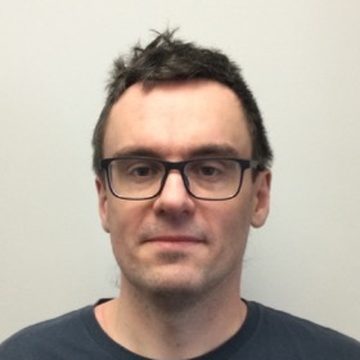
Marcin Magnus

Marcin Magnus

Principal Investigator

Computational RNA biologist. PhD with Janusz Bujnicki at IIMCB Warsaw, experimental training with Magda Konarska, an internship with Rhiju Das at Stanford, and a postdoc with Elena Rivas at Harvard. Works on RNA 3D structure prediction, RNA datasets and open-source tooling for structural RNA biology.

Experimental postdoc

Jadwiga Meissner

Postdoc · wet lab · SELEX

Runs in vitro selection of RNA aptamers and tests computationally designed binders at the bench, closing the loop between predicted structures and measured affinity. Funded by the NCN SONATA BIS-15 grant.

Postdoc — Structural Diffusion Modelsto be opened 2026

Open · computational

Generative models that build RNA structure: ligand-conditioned diffusion, denoising of backbones and bases, and the evaluation and data pipelines that keep the benchmarks honest. Funded by the NCN SONATA BIS-15 grant; the call is to be opened in 2026.

Postdoc — RNA Language Modelsto be confirmed · 2027

Open · computational

A new position for someone with a language-model background. RNA sequence, alignments and structure all lend themselves to LLM-style architectures, and this project is about building and evaluating them for RNA design and structure prediction.

PhD Student

Open · computational

A four-year computational doctoral project on RNA design: generative and language-model approaches to ligand-binding RNA, benchmarked against the structures and selection data the lab produces. Funded by the NCN SONATA BIS-15 grant, through the UW doctoral school.

Collaborators

Who we work with

The lab's methods are built and tested together with groups in comparative RNA genomics and sequence analysis.

Harvard University

Elena Rivas

Comparative RNA genomics and covariation analysis. Joint work on OpenRNAFold and on evidence for conserved RNA structure in alignments, continuing from Marcin's postdoc in the Rivas lab.

University of Western Australia

Marcell Szikszai

First author of RNA3DB and the driving force behind its structurally non-redundant splits. Joint work on dataset curation and on benchmarks that keep RNA structure prediction honest.

Selected publications

Recent workto complete

Replace the entries below with your selected papers — title, author list, journal and DOI.

2026

OpenRNAFold: an end-to-end approach for RNA 3D structure predictionin progress

Author list to be completed

Manuscript in preparation

2025

RNA-Puzzles Round V: blind predictions of 23 RNA structures

Bu, F.; Adam, Y.; Adamiak, R. W.; Antczak, M.; de Aquino, B. R. H.; Badepally, N. G.; … Magnus, M.; … (RNA-Puzzles consortium)

Nature Methods 22(2), 399–411 · DOI: 10.1038/s41592-024-02543-9

2025

RNAhub — an automated pipeline to search and align RNA homologs with secondary structure assessment

Magnus, M.; Gao, W.; Dutta, N.; Vicens, Q.; Rivas, E.

Nucleic Acids Research 53(W1), W496–W502 · DOI: 10.1093/nar/gkaf342

2024

RNA3DB: a structurally-dissimilar dataset split for training and benchmarking deep learning models for RNA structure prediction

Szikszai, M.; Magnus, M.; Sanghi, S.; Kadyan, S.; Bouatta, N.; Rivas, E.

Journal of Molecular Biology 436(17), 168552 · DOI: 10.1016/j.jmb.2024.168552

Teaching

Biological Therapeutics — a new MSc programme

A master's programme built jointly by the University of Warsaw and the International Institute of Molecular and Cell Biology in Warsaw, for students heading into modern biological and biomedical science. The curriculum runs from the design of nucleic acid-based drugs and their molecular mechanisms through delivery in lipid nanoparticles to preclinical studies and commercialisation — close enough to what this lab does that students from the programme are welcome to ask about projects with us.

Worth knowing

  • Tuition fees for the first edition of the programme have been waived.
  • Admission is by a qualifying interview conducted entirely in English.
  • A second round of the selection process is planned for September.
Ongoing · worldwide

CASP RNA SIG

A Special Interest Group on nucleic acid 3D structure prediction — experimental data, training and test sets, RNA alignments, ligand interactions, conformational ensembles. The community meets online every two weeks, and the talks are recorded and published openly. How the CASP Special Interest Groups work, this one included, is described in a community paper we co-authored in Proteins (2025).

Watch past talks on YouTube youtube.com/@CASPRNASIG
Join the team

Work with us

We look for people at every level — bachelor, master, PhD, postdoc — who are curious about RNA structure and comfortable moving between code and experimental work. Experience in machine learning, structural biology or experimental techniques is all welcome.

Get in touch →

Current openings

  • Postdoc — structural diffusion models
    NCN SONATA BIS-15 · generative structure
    Opening 2026
  • Postdoc — SELEX, wet lab
    NCN SONATA BIS-15
    Filled
  • Postdoc — RNA language models
    Computational
    TBC 2027
  • PhD student
    Computational · NCN SONATA BIS-15
    Open
  • Bachelor & master students
    Year-round
    Open
Location

Centre of New Technologies

University of Warsaw, Ochota campus.

InstituteCentre of New Technologies (CeNT), University of Warsaw
LabLaboratory of RNA Design and Therapeutics
Addressul. Banacha 2c, 02-097 Warszawa, Poland Open in Google Maps ↗